Patients

Dedicated to Patients with Orphan & Underserved Chronic Diseases

At Secretome, we are dedicated to patients with orphan and underserved chronic diseases. Our lead treatment’s goal is to improve left ventricular ejection fraction (LVEF) in Duchenne muscular dystrophy associated cardiomyopapathy.

ReAijah, Keelan, and Kye

ReAijah, Keelan, and Kye

"Its the ones that don't have treatment options that deserve something available soon, because with Duchenne, every day that passes is another day that they're losing muscle and declining."

Read more

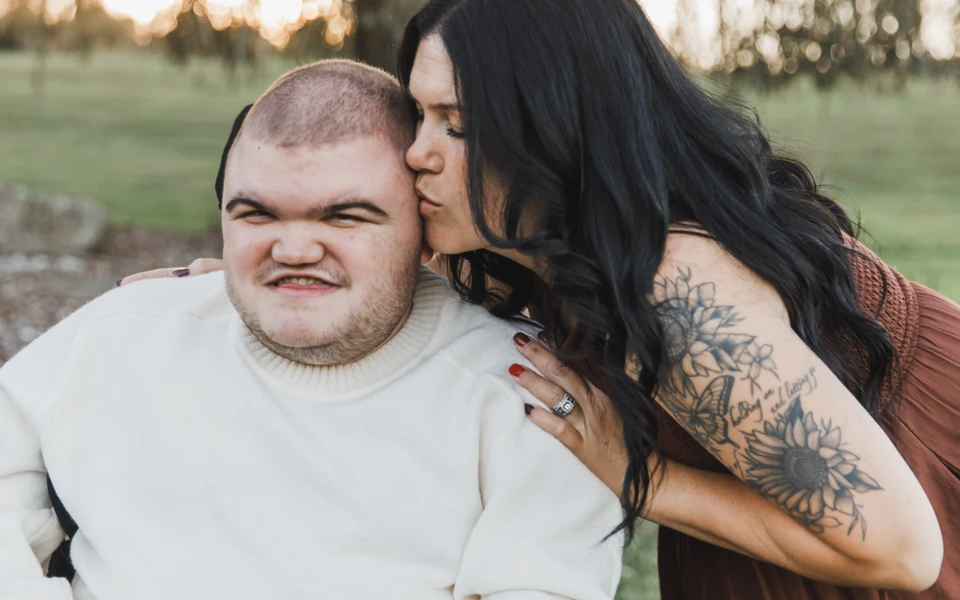
ReAijah never expected a routine blood test to change her life forever. Early in her first pregnancy, she and her co-parent learned that their son would have Duchenne muscular dystrophy, a rare, progressive, fatal disease she had never heard of. After her son, Keelan, was born she met with a neurologist who provided the first good news ReAijah had heard since the diagnosis–treatments for Duchenne were emerging and there were multiple clinical trials underway. Almost immediately, ReAijah began Keelan on an exon-skipping therapy. When her second son, Kye, was also born with Duchenne, she followed the same course. When gene therapy became available for both of her sons in 2023, ReAijah didn’t hesitate; both boys received it as soon as they were eligible.

Today, Keelan and Kye are five and four years old, and thriving. ReAijah and her co-parent have a strong partnership focused on giving their boys a happy fulfilling life. Her greatest fear is losing her children too soon and her deepest wish is simply that her sons get to pursue their dreams. She urges researchers to prioritize the children whose mutations still have no treatment options, because for every family living with Duchenne, time is the one thing they cannot afford to waste.

Betty, Max, Rowen, and Charlie

Betty, Max, Rowen, and Charlie

"I would ask [researchers] not to overlook the older boys and young men with Duchenne, because they have a lot of life left to live with the right therapeutic support."

Read more

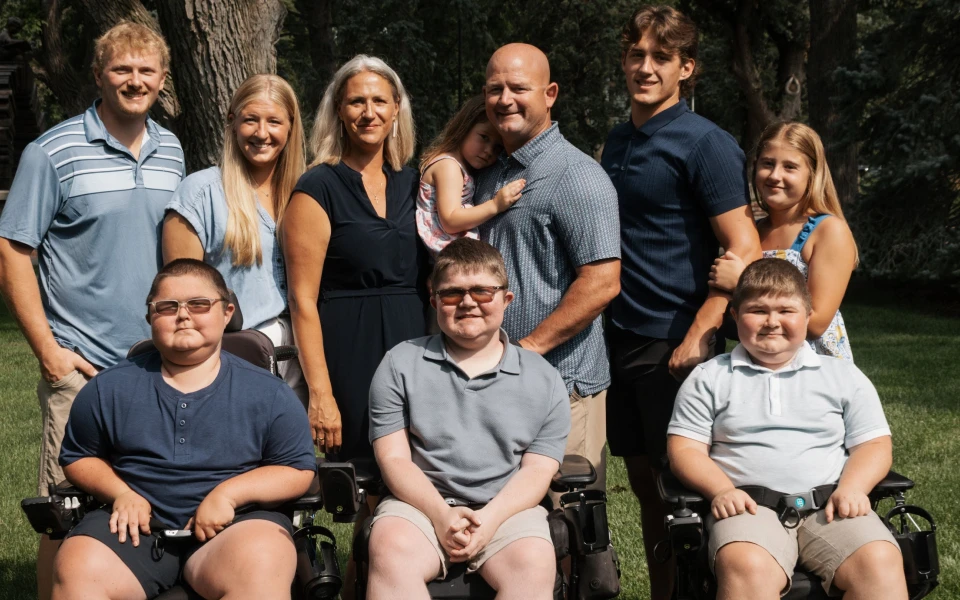
When Betty’s four year-old son Max was flagged for gross motor delays during a routine checkup, she wasn’t concerned. He was her second child, and she’d always been careful not to compare him to his older sister. However, when Max began physical therapy, the therapist quickly recognized the signs of Duchenne which resulted in a timely diagnosis. As the genetic profile and physical signs were explained, Betty knew that her two-year-old son Rowen also had Duchenne. She was pregnant with her fourth son, Charlie, at the time of Max’s diagnosis, and when he was born - it was confirmed that he also had Duchenne. A single clinic visit flipped their entire world upside down.

When Max, Rowen, and Charlie were younger, Betty asked researchers to find something to help them continue to walk and preserve their upper body strength. Now, sixteen years into their Duchenne journey, Betty’s perspective has shifted. Her sons - Max at 20, Rowen at 17, and Charlie at 15 - are young men now and have lost ambulation and upper body strength. Betty now encourages researchers and companies to not forget the older boys who still have so much life to live. Her greatest fear is losing her sons and she hopes they will have happiness and independence, and continue to live long and fulfilling lives.

Amanda and Cade

Amanda and Cade

"We're never gonna lose hope, because we're here. And six years ago, if you told me we would be here getting this drug [exon-skipping therapy] every week, I would say you're crazy."

Read more

Amanda’s son, Cade, was born 10 weeks early and always moved through the world a little bit differently than other kids. For years, Amanda raised concerns about his developmental milestones, but was always reassured that any delays were because he was premature and not to worry. After a preschool therapist expressed concern that something was going on with Cade’s muscles, they received a dispassionate and cold diagnosis of Duchenne muscular dystrophy without mention of treatment prospects. Amanda switched doctors and refused to accept that nothing could be done. Cade walked until he was 17 and then enrolled in an exon-skipping therapy trial to try and preserve his muscular strength. He completed the trial, despite needing to travel three hours each way for appointments, telling his mother “If this helps someone else, I’ll do it.”

When Cade was 12, he had a heart attack, and his heart function is what continues to keep Amanda up at night. Amanda is also concerned about the quieter losses that may occur: Cade’s ability to play video games, try new food, and his spunky attitude. For researchers, Amanda has a direct request: don’t leave older boys behind and don’t leave rare mutations behind.

Colin

Colin

“In the end, it’s a terminal disease, but I’ve come to realize, living your life is terminal..you never know how long you’ve got…I definitely try to live life in the moment and make every day count”

Read more

At three years old, Colin Werth underwent a routine tonsillectomy at his local community hospital and had a severe reaction to anesthesia which sent him to the PICU. This reaction and his subsequent PICU stay resulted in a surprising diagnosis: Duchenne Muscular Dystrophy. Despite the initial shock and concerns about his diagnosis for his parents, Colin experienced a slower-than-average progression of Duchenne, allowing him to remain ambulatory until age 21. Today, at 31, Colin lives with his parents, who provide full-time caregiving, and receives weekly exon-skipping therapy to help slow his progression. Colin is deeply engaged with the Duchenne community and finds strength in close friendships and the support network that has helped him cope with both the physical challenges and the emotional impacts of losing friends to Duchenne.

Reflecting on the speed of progress in Duchenne treatments, beginning with just steroids, and now having eight FDA-approved therapies, Colin remains optimistic about the future, but realistic about the ongoing need for research, particularly regarding cardiac health. He acknowledges that a cure may not be possible for patients from his generation, but he hopes newer generations will see a cure in their lifetimes. He is a passionate advocate for the inclusion of adults in clinical trials, emphasizing that the focus should shift beyond just maintaining ambulation toward stabilizing upper-limb, cardiac, and pulmonary function. Colin urges companies to design trials that minimize patient burden by allowing for flexible scheduling or remote site visits to accommodate the daily realities of living with Duchenne and to focus on treatments that prioritize preserving and hopefully restoring some lost function.

Why Focus on DMD Associated Cardiomyopathy?

DMD: A Disease of Skeletal and Cardiac Muscle

01

Duchenne muscular dystrophy is a debilitating myopathy resulting in progressive functional decline & early death

02

Cardiomyopathy is the leading cause of death and is not addressed by currently available therapies

03

Cardiac fibrosis & loss of left ventricular ejection fraction (LVEF) correlate with heart failure and morality1
1. Soslow et al. 2023 PMID: 37288563

Key Features of THRIVE 2

The THRIVE 2 Study is an Open-Label Study to Evaluate the Safety and Efficacy of STM-01 in Pediatric and Adult Participants with Duchenne Muscular Dystrophy-Cardiomyopathy

Home Dosing

Treatment administered in the comfort of the home environment

No Wash-Out Period

Patients continue current standard of care without interruption

No Age Maximum

Open to eligible pediatric and adult participants with DMD-cardiomyopathy

No Ambulation Limits

Open to ambulatory, late-ambulatory, and non-ambulatory participants

No Medication Limits

Participants are eligible regardless of previous or current medication


Step 1
Screening

Eligibility assessment &
informed consent

Step 2
Enrollment

Eligibility assessment &
informed consent

Step 3
Treatment & Home Dosing

STM-01 administration with
no wash- out period

Step 4
Follow-Up

Safety & efficacy monitoring
including LVEF

Resources for Families

We stand with the broader DMD community and partner organizations supporting patients and their families.

best-day-ever.webp
charleys-fund.webp
charliescure.webp
cure-duchenne.webp
k-md.webp
little-herc.webp
mda.svg
parent-project.webp
team-joseph.svg

Questions?

Email: advocacy@secretometx.com